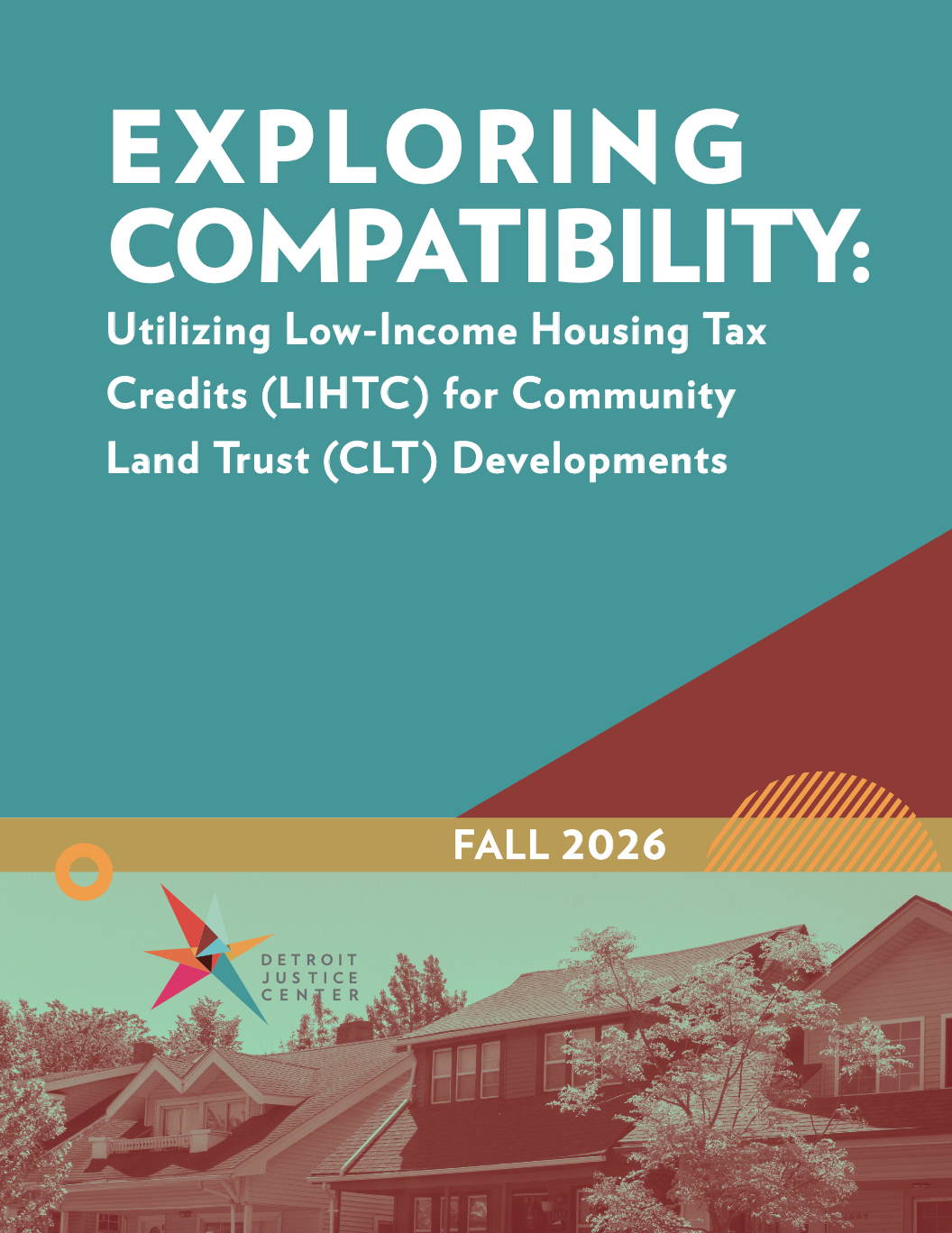
Exploring Compatibility is a national study examining how Community Land Trusts are using the federal LIHTC program to finance affordable rental housing while preserving long-term affordability and community stewardship.Read More
The Detroit Justice Center (DJC) is pleased to announce Mariah Barrera as its 2026–27 Artist in Residence. Over the coming residency year, Barrera will develop On Earth As It Is in Prison, a photography project that reexamines one of the most familiar — and least documented — images in system-impacted family archives: the prison visitation...Read More
“What would it look like to reclaim the power of the individual and turn our supporters into true co-conspirators in our work?” This was one of the many questions our Development team asked ourselves as we witnessed other nonprofits halt their operations due to federal funding cuts or sudden grant revocations.Read More
Wayne County has built a $670-million dollar complex that went almost $150 million over budget, including a new jail. Our fact sheet includes information on the jail project, data on the harms jails cause to individuals, families, and communities, and ideas for possible alternatives.Read More
A fact sheet that covers how much the city spends on the Detroit Police Department, what the police do with that money, a grounding statement from our Executive Director on what it means to defund the police, and a few ideas on where our tax dollars could go instead.Read More
Last November, DJC launched our 2025 year-end fundraising campaign—Dare to Struggle, Dare to Win. We’re deeply grateful to share that, with your support, we hit our goal and have already begun putting these funds to work in service of local movements fighting for liberation.Read More