

A reflection from Sheba Rogers
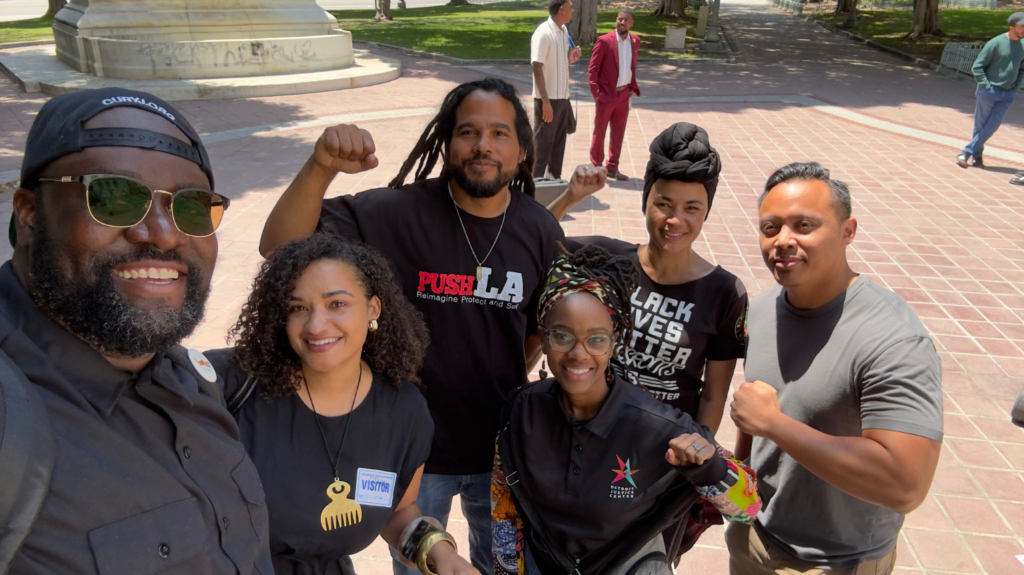
As a member of the Building Beyond Policing (BBP) Network, a national network of organizations working to build community power and advance alternatives to policing and incarceration, the Detroit Justice Center (DJC) had the opportunity to participate in a learning exchange with a fellow network partner. Last summer, we began an exploratory conversation with LaDefensa, a femme-led abolitionist organization in Los Angeles working to shift public resources and power away from criminalization and incarceration and toward community care. We quickly recognized shared values, aligned campaigns, and an opportunity to learn from one another’s work. With support from a BBP learning exchange grant, we began outlining goals for a reciprocal exchange.
Through my work leading DJC’s Community Roundtable, a network established in 2024 to strengthen culturally rooted, trauma-informed, and non-carceral approaches to mental health and substance use care across metro Detroit, I was particularly interested in learning from LaDefensa’s budget advocacy, campaign events, and coalition-building strategies.
LaDefensa sought to explore DJC’s grassroots organizing and in-person engagement strategies in the wake of the pandemic, our movement lawyering approach to inform their ballot measure advocacy, and the Roundtable’s ecosystem mapping, research, and organizing efforts.
One year later, as this incredible learning exchange comes to a close, I find myself sitting with deep gratitude and reflection on what we’ve learned, the relationships we’ve built, and the possibilities that emerge when we build relationships, exchange strategies, and strengthen collective power across cities and movements.
As part of membership with the Building Beyond Policing (BBP) Network, DJC had the opportunity to engage in a learning exchange with another BBP partner. Last summer we had an exploratory conversation with LaDefensa in Los Angeles, California, and quickly observed aligned interests and shared values across respective campaigns and projects. We immediately saw what the value could be to learn together and help inform one another’s work. We envisioned a reciprocal learning opportunity, and upon being awarded a BBP learning exchange grant, we started outlining goals for the exchange. Given the work I lead with our community partner roundtable, I set out to learn from La Defensa’s campaign events, including their budget rally and coalition strategy sessions, to take back to our Roundtable leadership committee. LaDefensa sought to explore DJC’s grassroots organizing and in-person engagements post-pandemic, movement lawyering to inform their work with ballot measures, and our Roundtable ecosystem scan research and organizing work. One year later, I’m sitting with gratitude and deep reflection now that this amazing learning exchange has come to a close.

Our Why?
The learning exchange grew out of a shared interest in strengthening campaign strategies and learning from one another’s approaches, challenges, and experiences to build stronger connections between abolitionist policy advocacy, grassroots organizing, and community-led care. I was impressed with the work I learned about the ReImagine L.A. Coalition and their Care-First Budget, including robust coalitional work, deep community listening, surveys, and participatory budgeting sessions. As our community partner roundtable was ramping up and growing, I knew that we could learn from LaDefensa’s targeted campaign strategies and local wins.
Learning On The Ground with LaDefensa
In January 2026, I was excited for my first visit to L.A. to be a part of the ReImagine L.A. Coalition Strategy meeting. It was attended by over 20 community partner organizations and grassroots movement leaders. I quickly observed common values, shared language and priorities to that of DJC – non-carceral care; mental health care rooted in dignity; non-police crisis response; community reinvestment to address roots causes needed for true safety and public health; defunding policing and carceral strategies that perpetuate harm and violence and decriminalizing of substance use and harm reduction to name a few… I was in the right place! I was invigorated to see a tight coalition strategy rooted in refining coalition demands for the coming year, including clear targets, timelines, and wins that could be named by June. I observed effective planning for the year ahead, including co-drafting a calendar of key actions, town halls, rallies, and advocacy actions, including a roadmap aligned to their local county budget cycle. The meeting concluded with clear next steps, timelines and accountability for the demands and actions that were agreed upon. The following day, I went to stand in solidarity with activists during a press conference organized by Black Lives Matter Los Angeles at LAPD headquarters as they demanded justice for the killing of Keith Porter Jr., a black man and father of two who was fatally shot by an off-duty ICE agent. Public comments and remarks were similar to what I have experienced in Detroit and across other U.S. cities where advocates and organizers are perpetually demanding for less investment in carceral structures that often lead to greater harm and even death, and more investment in community care, and non-police, non-ICE crisis response.
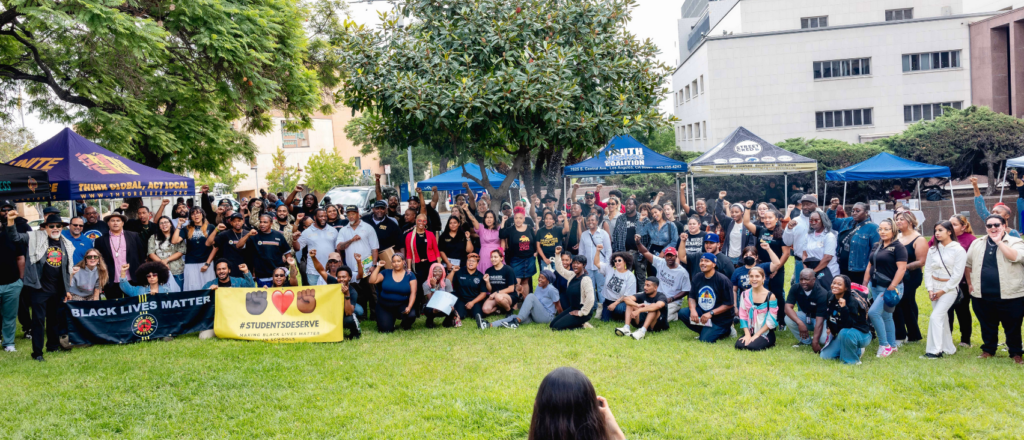
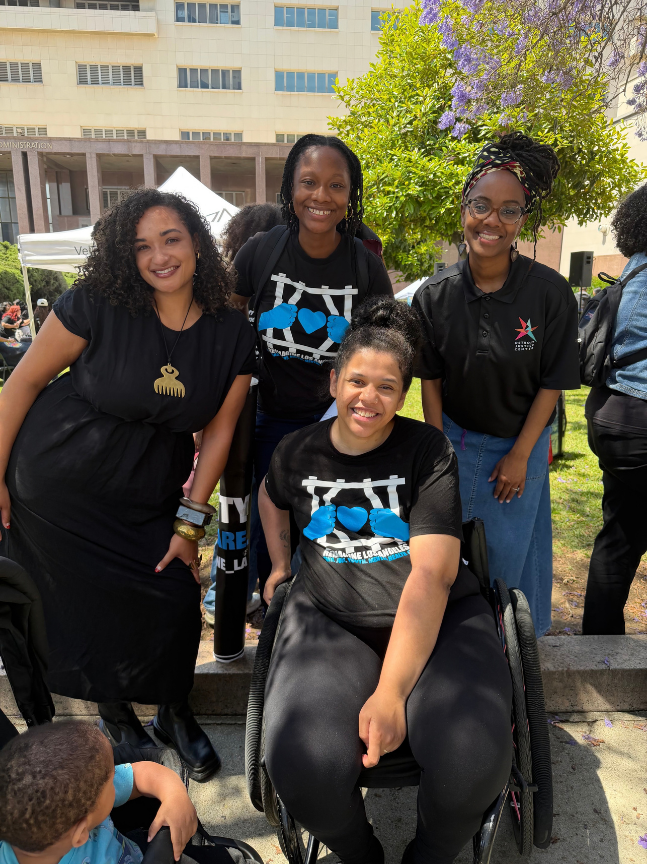
Returning back in May, my colleague and I were able to be a part of the Care First Budget Rally and Resource Fair, and witnessed the deep organizing that took place to bring community members out to mobilize and elevate a care first agenda. We spent time with organizers, reentry programs, mental health providers, immigrant justice groups, and directly impacted leaders of all ages, identities, and lived experiences learning about the ecosystem of decriminalized community-based care they’ve been building across LA. It was powerful to see the synergy across diverse organizations and even a focus on youth voice and justice for those experiencing harm in juvenile detention facilities.
Similar to DJC’s work, the various campaign activities organized by LaDefensa and ReImagine L.A. Coalition showcased how mental health, reentry, peer support, housing, and crisis response can work together rather than as separate systems. Each visit and respective programming emphasized how communities can build responses that don’t require police or incarceration as the entry point to receiving care. This is core to what our community partner Roundtable has been deepening through our work over the past two years, and emphasizes the importance of our 4 B’s– a framework we developed within the Roundtable focusing on building awareness, building capacity, building relationships and building the movement. This framework has been a catalyst for sustaining our vision and mission of care-first, non-carceral strategies that shift the narrative away from blame to accountability.
Highlights and Learnings
- Policy in Action: In May, on the same day as the Budget Rally and Resource Fair, we walked down to City Hall and observed the work and major win of coalition partners PUSH L.A. This was a historic day! The Council voted 14–0 to advance major restrictions on pretextual traffic stops, directing the Police Commission to strengthen LAPD policy and limit stops that don’t involve a significant and imminent safety risk. It was inspiring to witness this win alongside organizers who have spent years pushing for it. This work connects deeply with DJC’s Highway Robbery work and movement lawyering work to address injustices in Detroit with pretextual traffic stops, fines and fees that perpetuate the cycles of criminalization.
- Coalition Building: Attending the ReImagine L.A. community planning meetings and coalition meeting, we observed numerous campaign strategies and effective planning processes that center community partner expertise and shared leadership. Our roundtable, through the work of our working groups, is now positioned to explore similar campaign organizing strategies, including identifying and setting key targets and demands for our work ahead. LaDefensa was able to join many of our working group meetings and several roundtable engagements to learn with our team!
- Community Advocacy and Budget Organizing: The Budget Rally and Resource Fair exemplified ways to deepen political education, relationship building, and civic participation that amplify community voices and strengthen community power. Additionally, this provided a model for shifting public resources toward mental health care and community-led alternatives to incarceration.Through the work of our capacity-building training series this summer, we were able to operationalize the roundtable’s values into a tangible training that helps build community power and capacity to implement and advocate for trauma-informed, and culturally rooted care across our mental health ecosystems. Utilizing the expertise of our own community, we intentionally invited our community Roundtable partners to lead all of the community forums and trainings, which brought out over 65 community participants.
In between visits, our organizations met to check-in on our various projects and campaigns, offering recommendations and insights, and general support and care for each other with all that we each hold in our work and personal lives. There was so much more gained and gleaned over this year of learning and exchanging, well beyond campaign strategies and budget organizing, including leadership development, management and sustainability of coalition structures, addressing burnout and centering care of organizers. Through this exchange, DJC and LaDefensa identified opportunities to strengthen our respective work while recognizing that meaningful systems change requires community-led organizing, policy advocacy and investment in whole-person care. The exchange also highlighted the importance of resourcing partnerships, addressing organizational capacity, and creating intentional connections between grassroots organizing, service provision, and policy change.
At DJC, we recognize the shared experience, struggle, and wisdom of movements across cities and across the nation and have always engaged in deep learning with our beloved comrades in their respective places. This exchange is a reminder that building a national movement beyond policing requires us to remain connected, to share strategies and resources, and to deepen the solidarity and mutual support that make our collective visions possible.