

For many people, the law is a frustrating maze of deadlines, forms, agencies, fees, and unfamiliar language. Legal systems can determine whether someone keeps their home, restores their driver’s license, clears their record, receives public benefits, or remains connected to their family. But access to legal information and support is far from equal.
The Detroit Justice Center’s Community Legal Advocates program was created to change that. Community Legal Advocates, or CLAs, help make the law more understandable, accessible, and responsive to the people most affected by legal and economic injustice.
Since launching in 2018, our program has grown from a Detroit-based effort to help homeowners challenge property tax assessments into a broader model for democratizing access to the law. Over the past two years, DJC has worked to share that model with organizations, educators, and community leaders in other parts of the country.
Our program was modeled in part on Namati’s community paralegal approach. Namati describes community paralegals as a bridge between the law and everyday life: people trained in basic legal knowledge, mediation, organizing, education, and advocacy who work directly with their communities. Their role is not to replace attorneys, but to help people understand their options, navigate systems, pursue remedies, and organize for broader change.
DJC’s Community Legal Advocate Training is a multi-day program for people and organizations committed to addressing legal inequities in their communities. The training is designed for legal nonprofits, grassroots organizations, social justice organizers, civic leaders, educators, and others who want to build community power through legal education and advocacy.
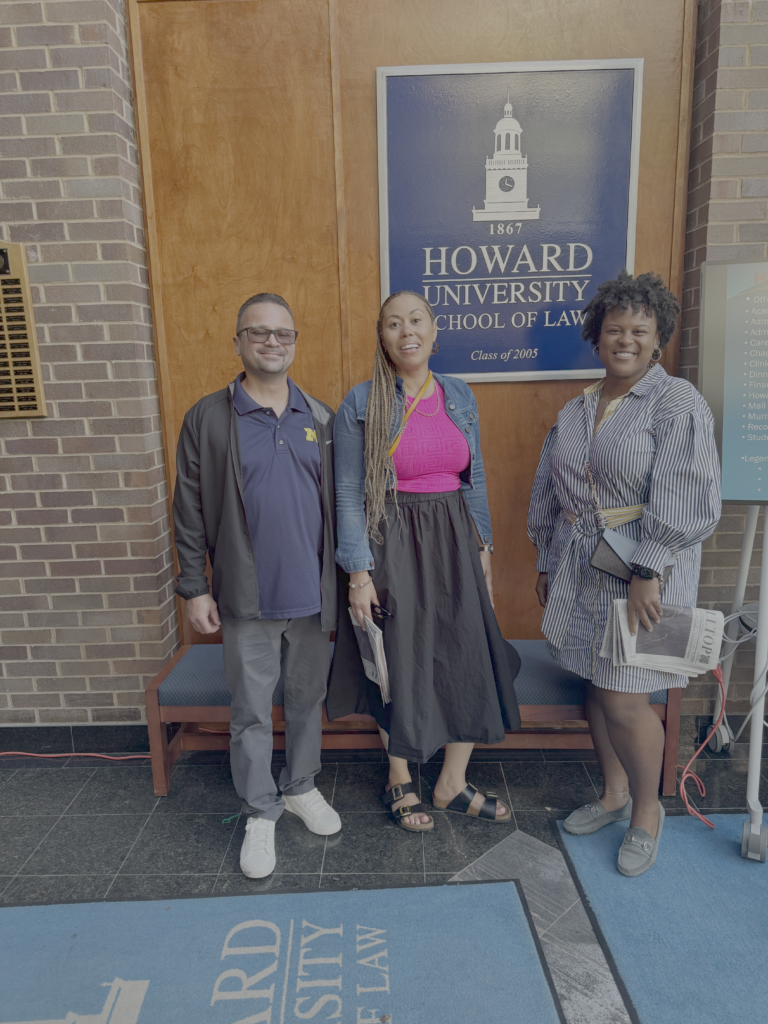
Participants can expect to learn how to:
- Understand basic legal concepts and identify common legal issues
- Conduct foundational legal research
- Document facts, stories, and patterns of harm
- Navigate courts, government agencies, and other institutions
- Explain legal information in clear, accessible language
- Help community members understand their options without giving unauthorized legal advice
- Connect people with attorneys, legal aid providers, and other appropriate resources
- Identify when a matter requires attorney involvement or more intensive legal support
- Build campaigns around recurring legal problems.
- Use storytelling and community engagement to develop trust and support collective action
The training is grounded in advocacy, community empowerment, and legal education. It does not assume that participants have a law degree. Instead, it asks what becomes possible when people closest to a problem have the tools to understand the law, use it, and help shape it.
Our approach mirrors the legal empowerment cycle described by Namati: know the law, use the law, and shape the law. Community paralegals around the world have used these strategies to address issues including land rights, health care, citizenship, environmental justice, and people’s rights in the criminal legal system.
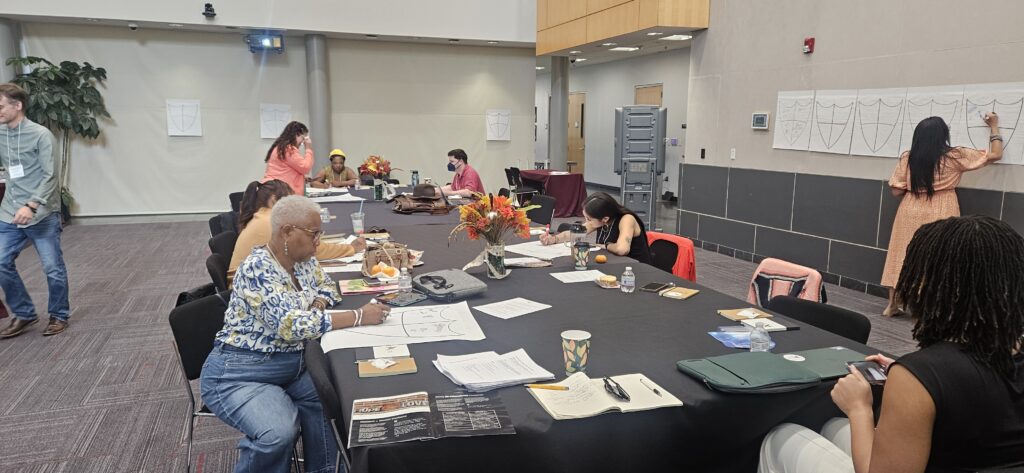
In 2024, DJC partnered with the Robert Wood Johnson Foundation to bring DJC’s CLA model to three historically Black colleges and universities, North Carolina Central University School of Law in Durham, North Carolina, Texas Southern University’s Thurgood Marshall School of Law in Houston, Texas, and Howard University School of Law in Washington, D.C., as well as community partner organizations Cleveland Votes and SNAPCo, Atlanta.
At each site, local law school partners helped identify community participants and connect the training to legal issues affecting their regions. The curriculum was developed from DJC’s experience, but participants are expected to adapt the work to their own communities and local legal systems.
An important feature of the model is the goal of not exporting a fixed Detroit program and asking other communities to reproduce it exactly. The goal is to share a set of principles, tools, and practices that local organizations can adapt to their own needs.
Issues vary from place to place, but people across the country often face legal problems tied to the same basic needs: housing, economic stability, health, safety, family, and freedom.
Community Legal Advocates can help communities identify and respond to issues such as:
- Eviction, unsafe housing, and landlord-tenant disputes
- Property tax assessments, tax foreclosure, and displacement
- Water shutoffs and other utility access issues
- Record expungement and other barriers connected to criminal legal system involvement
- Access to public benefits, health care, and disability services
- Employment discrimination, wage theft, and barriers to work
- Family law and custody-related legal processes
- Debt, predatory lending, and consumer protection
- Complaints against government agencies and Freedom of Information Act requests
Our CLA model is especially well suited to problems that are repeated, systemic, and difficult to solve through one individual case alone. CLAs can help people understand a process, gather information, connect with the right institution, and recognize when a pattern requires organizing or policy change.
These issues are also closely connected to health. Stable housing, income, employment, access to health care, and neighborhood safety all shape people’s ability to live healthy lives. The Robert Wood Johnson Foundation describes these conditions as social determinants of health and emphasizes that communities most affected by inequity are often best positioned to identify the solutions they need.
A legal problem is therefore rarely “just” a legal problem. An eviction can become homelessness, illness, school disruption, or family separation. A suspended license can become job loss. A denied benefit can mean food insecurity or an inability to afford medication. Helping people address these legal barriers is one way to strengthen health, stability, and community power.
DJC’s work is part of a larger ecosystem of community-based organizations that understand the importance of trust, local leadership, and practical education.
Cleveland VOTES, for example, has developed a model centered on educating, connecting, and empowering residents through trusted community partnerships. Rather than trying to become the primary provider of every service, the organization works as a connector and intermediary, offering training, resources, grants, and relationships to organizations already rooted in their communities.
That is relevant to legal empowerment and our CLA training. Communities do not need outside experts to replace their existing leadership. They need partners who can recognize and strengthen the knowledge, relationships, and organizing already present.

Similarly, SnapCo in Atlanta has combined advocacy, mutual aid, leadership development, and community care for Black trans and queer communities. Its work demonstrates how direct support and movement-building can reinforce one another. SnapCo’s partnerships connect people to housing, health care, legal assistance, diversion programs, and other resources while also building leadership and collective power.
The CLA model draws from this same understanding. Legal advocacy is most effective when it is rooted in relationships and connected to broader efforts for safety, dignity, economic justice, and self-determination.
The freedom dream for Community Legal Advocates is for legal knowledge to not be treated as a privilege reserved for lawyers, judges, landlords, corporations, or government agencies.
It is where people can find trusted legal support in the places where they already live, work, organize, worship, learn, and care for one another. It is where community members do not have to face an eviction, tax foreclosure, criminal record, unsafe home, or government bureaucracy alone.
In that future, every community has people trained to help neighbors understand their rights and options. These advocates are connected to attorneys and legal organizations when deeper support is needed, but they are also accountable to the communities they serve. They help people solve immediate problems while documenting patterns, building relationships, and changing the systems that create harm.
DJC’s work shows that democratizing the law can begin with something practical: helping a homeowner appeal a property tax assessment, helping a tenant understand their rights, helping a formerly incarcerated person clear a record, or helping a neighbor navigate a government agency.
From there, the work can grow. People learn that the law is a tool we can use together, and a system we have the power to reshape.