

In the aftermath of the 2020 uprisings sparked by the killing of George Floyd, communities across the United States grappled with calls to reimagine public safety, confront police violence, and question the role of the carceral system. Amid this national reckoning, many cities began exploring alternatives to traditional policing, focusing on approaches that prioritize healing, community accountability, and safety outside the criminal justice system. However, some cities, including Detroit, have doubled down on investments in policing and surveillance rather than embracing the shift demanded by activists and community organizers.
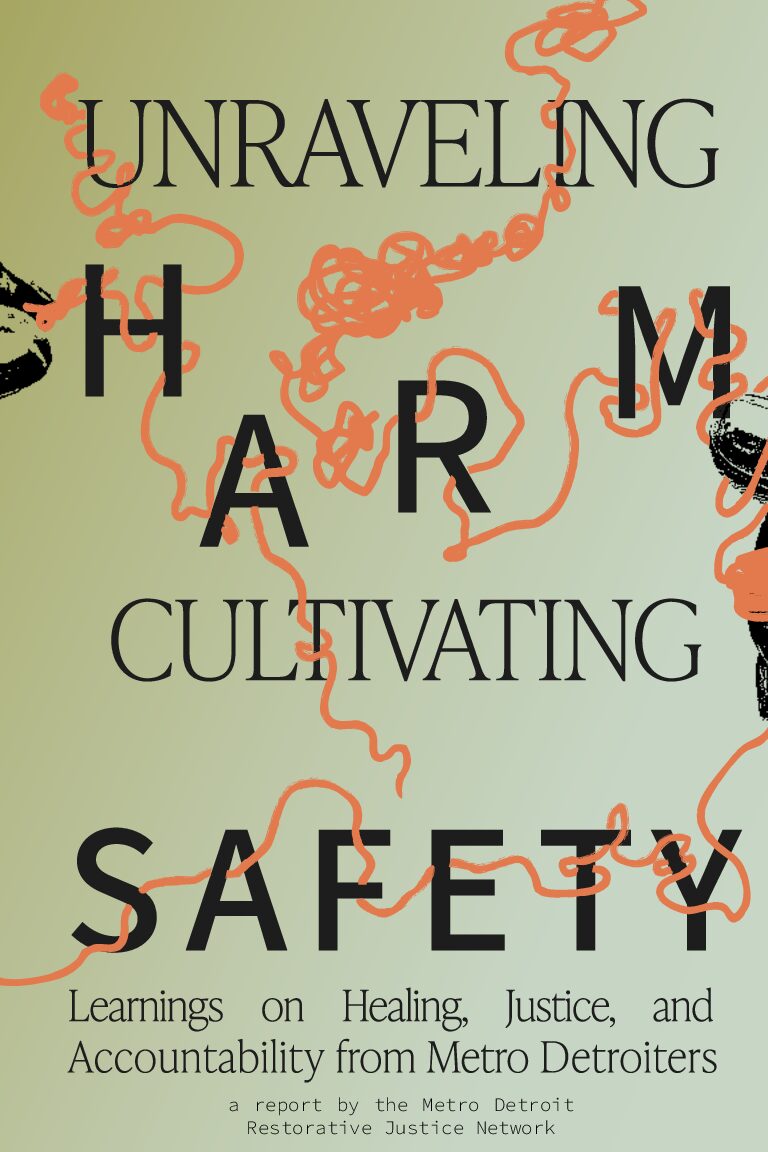
One non-carceral initiative is the Metro Detroit Restorative Justice Network (MDRJN), a special project of the Detroit Justice Center (DJC) that seeks to develop community-led responses to harm that do not rely on the police or prison systems. This project is grounded in a growing abolitionist movement in Detroit, which advocates for alternatives that focus on healing and accountability outside the carceral system. By gathering the perspectives of Metro Detroit residents—particularly Black residents—MDRJN’s research aims to identify what resources and systems are needed to address harm and accountability in ways that reflect the lived experiences and desires of the community. The findings from MDRJN’s research are being released on August 21, 2025, in a book titled “Unraveling Harm, Cultivating Safety” that illuminates potential avenues for restorative justice in SE Michigan.
The Need for a Broader Understanding of Harm
A key finding of “Unraveling Harm, Cultivating Safety” is that residents often struggle to define harm, which makes it harder to address or seek justice for it. This difficulty stems from a cultural normalization of harm, where experiences of violence and mistreatment are often seen as inevitable or unremarkable. For many, harm is primarily understood as physical violence, which limits the ability to recognize and respond to emotional, psychological, or material harm. This tendency to overlook the less visible or less obvious impacts of harm delays the process of healing and makes it harder for communities to build effective responses.
As one participant shared, people often don’t realize the harm they’ve experienced until much later, making it challenging to seek accountability or support. In order to foster stronger communities and a more effective response to harm, there is a clear need to encourage better skills for identifying and naming harm, as well as supporting both residents and service providers in this critical task.
Prioritizing Healing and Support
Once harm is identified, the goal is to begin healing—an area where Detroit residents have expressed a clear need for more resources. Many participants in the study described experiencing persistent emotional, psychological, and material consequences from harm, which were often compounded by intergenerational trauma. For some, the healing process involved seeking support from community and kinship networks, while others turned to professional mental health services. Unfortunately, mental health support is often hard to access, leaving many people without the resources they need to recover.
Participants emphasized that the ability to have their experiences validated was central to their healing. They wanted a space where their pain could be acknowledged and understood. This speaks to a broader cultural shift toward the recognition of harm and the importance of creating systems that offer more than just punitive responses, but true support for survivors of harm.
The Call for Accountability
While healing was a priority for many, the issue of accountability also loomed large. For many participants, accountability requires more than just an acknowledgment of harm—it also involves a concrete apology, a change in behavior, and some form of reparative action. However, the notion of accountability varied widely among respondents. For some, justice meant punitive actions, such as arrest or imprisonment, especially for more severe forms of harm. Others felt that accountability could be achieved outside the carceral system, through community-led processes of repair and restitution.
What is clear from the study is that the community wants accountability processes that are responsive to the needs of survivors. This means ensuring that those harmed have some say in how accountability is defined and pursued. For some, this could involve restorative justice practices that bring together victims and offenders to discuss the harm done and agree on steps for repair. For others, traditional forms of accountability—such as legal consequences—remain important, but these should not be the only option.
Rethinking Police Involvement
The issue of policing in Metro Detroit is deeply complex. While some participants expressed trust in law enforcement, others voiced skepticism and fear, citing past experiences of mistreatment and trauma at the hands of police. There was also a significant contradiction in how people viewed policing—on one hand, they acknowledged the need for safety and security, but on the other hand, many questioned whether police were the right tool to provide that safety.
A critical insight from the study is the growing interest in non-carceral alternatives to policing. While many participants were open to the idea of alternatives, their willingness to engage with them was tempered by uncertainty about what these alternatives might look like and whether they could be trusted. This highlights the need for clear communication, education, and the development of practical alternatives that people can turn to when they seek safety or justice.
The Path Forward: Recommendations for Transformation
The findings of this research have significant implications for how Detroit—and other cities—can begin to shift away from over-reliance on the carceral system and toward community-based responses to harm. Key recommendations include:
- Improved Education and Support: It’s essential to help residents and service providers identify and name harm, moving beyond a narrow definition of violence to encompass emotional, psychological, and structural harm. Community-based workshops, trainings, and resources could play a key role in this shift.
- Expanded Healing Resources: There is a clear need for increased access to mental health services and community-led healing programs that prioritize the long-term recovery of survivors. These services should be culturally competent and easily accessible to those who need them most.
- Restorative Accountability: Nurture and cultivate restorative justice practices that allow for accountability outside of the carceral system. These practices should center the needs and desires of survivors and prioritize repairing relationships and restoring community harmony.
- Non-Carceral Alternatives to Policing: Invest in non-police responses to harm, such as crisis intervention teams, community-based mediation, and support services that can address the root causes of conflict and prevent harm before it escalates. These alternatives should be piloted and refined with input from the communities they serve.
By listening to the voices of Metro Detroiters—especially Black residents—MDRJN’s study highlights a powerful vision for a future where justice and accountability are rooted in community care, healing, and transformative practices. To truly address harm, we must embrace solutions that extend beyond the prison-industrial complex and empower communities to take charge of their own safety and well-being.