
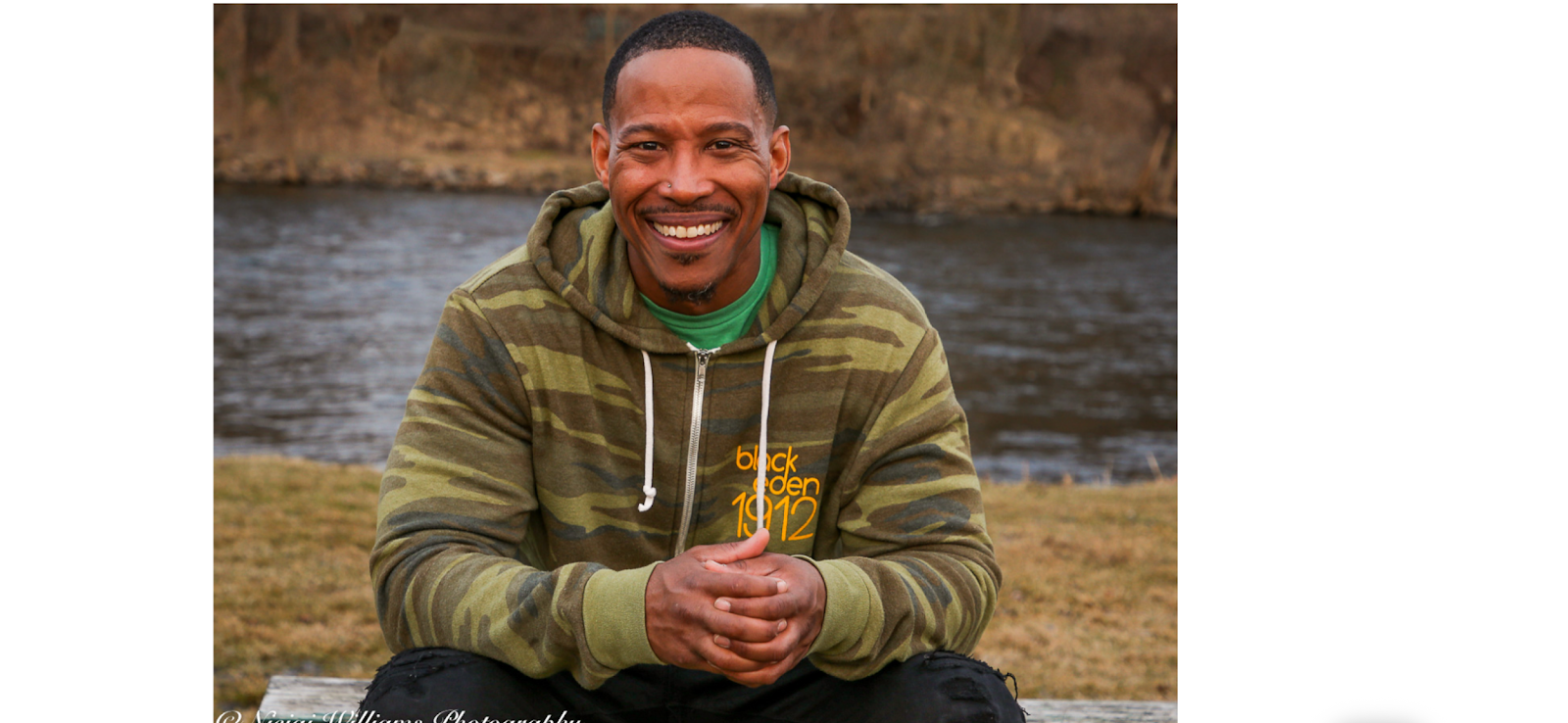
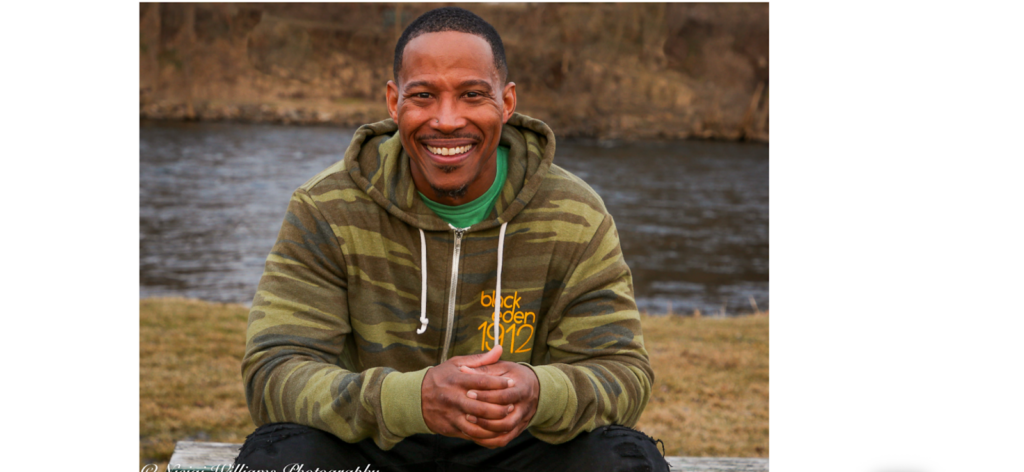
Detroit-based multidisciplinary artist, musician, and poet Cozine Welch joins the Detroit Justice Center to develop No More Heroes: a visionary performance work about what freedom really looks like in the body, long after the bars are gone.
The Detroit Justice Center is proud to welcome Cozine Welch as our 2026–27 Formerly Incarcerated Artist in Residence. Welch is a Detroit-born poet, educator, performer, and musician whose journey from incarceration to becoming an emerging voice in the Michigan community has shaped an artistic practice rooted in honesty, healing, and community accountability. Over the coming residency year, he will develop his new performance work, No More Heroes, in partnership with DJC and collaborating formerly incarcerated artists.
About Cozine Welch
Cozine A. Welch, Jr. is a Detroit-born poet, educator, performer, and musician. Formerly incarcerated at the age 17 and sentenced to 22–40 years, he became a prolific writer while inside —the most published contributor in the Michigan Review of Prisoner Creative Writing, appearing in eleven consecutive volumes. Since release, his lyric poetry and spoken word have appeared in Michigan Quarterly Review, Plough Quarterly, Periphery, and other journals. A lyric poet and slam performer, he is also an accomplished guitarist, singer, and songwriter, with pieces like “Burn My Bones” and stage performances and writings such as “With Love, From Inside” blending raw expression with music to confront isolation, explore healing, renewal, and the human realities of incarceration.
Connect with Cozine:
Social Media:
YouTube: https://youtube.com/@cznszn?si=7r_OX7kFUozWiPFe
Link Tree:
Email:
About No More Heroes
No More Heroes is a performance-driven, music-centered piece set 15 to 30 years after mass incarceration and policing have ended. The play is set in a world reorganized toward peace, sustainability, and collective care. Welch is careful to resist the seduction of utopia. The future he imagines is not clean or painless, it is hard won.
At the heart of the piece is a grandfather figure, drawn from Welch’s own experience of long-term incarceration, navigating a transformed world alongside his grandchildren. Fruit trees line the streets. Communities share resources. Harm is addressed through repair, not punishment. And yet the grandfather’s hands still tremble, not from age, but from memory.
He folds laundry too tightly. He salts food out of habit, still tasting the ghost of scarcity. He locks doors at night even though everything is safe. The carceral world that shaped him may be gone, but the body cannot forget on command.
The work inhabits what Welch calls “the messy middle of world-building”: the moment when structures have changed enough to be safe, but the people who survived the old violence are still learning, slowly and humanly, how to live inside freedom.
The grandchildren in the piece have grown up studying the “Time Before Now” as a solemn curriculum: the timeline of mass incarceration, racialized violence, and economic abandonment held with the same seriousness that earlier generations brought to the history of slavery or colonialism. They understand the weight of what was even if they did not survive it. That gap, between knowing and having lived it, is at the heart of No More Heroes.
In one exchange, a granddaughter asks the grandfather figure whether he ever hurt someone for money. He answers with the kind of honesty that only a truly safe world makes possible: “I hurt people, yes. Not always with my hands. Sometimes just by staying quiet when I should’ve spoken.” She nods and replies that this is why they have communities now—so nobody has to choose between quiet and starving. He weeps with joy that she understands, and with grief that he never had that clarity at her age.
A Sonic and Performative Meditation
Welch will express this story through live performance blending spoken word, guitar, piano, layered vocals, and storytelling. His song “No More Heroes” will be reimagined within the piece. The tone is intimate and confessional, not polished utopian propaganda.
The piece follows a three-part arc:
Act I — Now: The urgent present of protests, locked courts, and what still must change.
Act II — The Flip: A collective rupture that finally forces real reform.
Act III — The Aftermath: Set 10–20 years later, where the grandfather–grandchild scenes live most fully and the real emotional labor unfolds.
Welch intends to collaborate with fellow formerly incarcerated artists for visual and performance support throughout the residency year.
“My goal is that no one leaves this work able to say they have no idea what tomorrow looks like. Not in a naïve or prescriptive way—but in a grounded, embodied way. I want audiences to feel a future that is tangible: imperfect, emotional, accountable, and alive.”
— Cozine Welch, from his residency proposal
Our Residency Panel
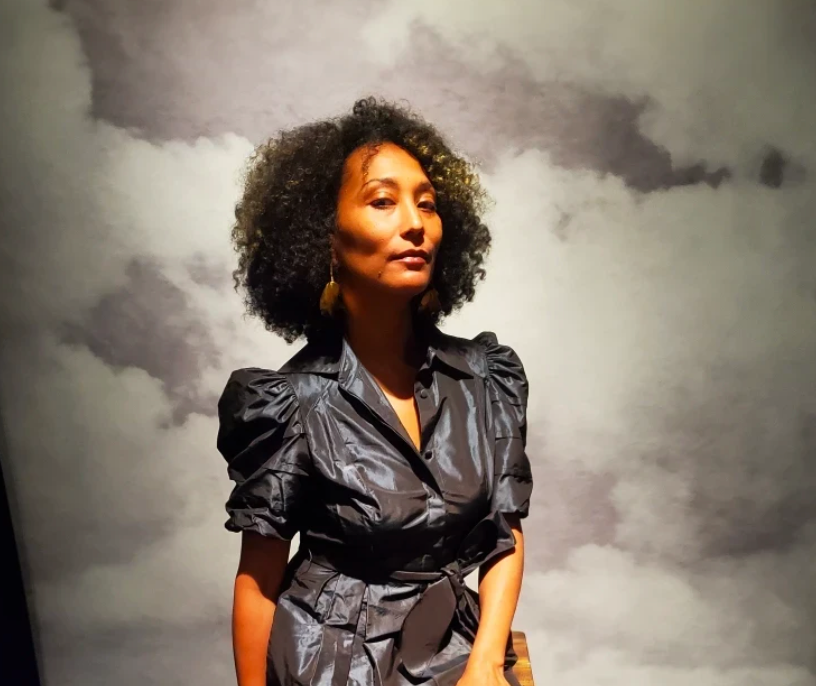
Bio:
Halima Afi Cassells (b. 1981) is an award-winning interdisciplinary community-engaged artist, mom of three, avid gardener, with deep roots in Waawiiyaataanong/ Detroit, MI. Born into a creative family, her parents photographed her unsolicited murals and fashions as a kid, encouraging her exploration. Community is the heart of her work. She credits gardening as inspiring her move away from painting to a practice where she aspires to use natural, found, and up-cycled materials and processes that lend to the thriving of all (human and non-human) communities.
Halima continues to explore relationship-building, and the notions of freedom and work, value and disposability in a participatory context through projects like the Free Market of Detroit, Traveling Indigo Vat, and her Tables and Thrones series.
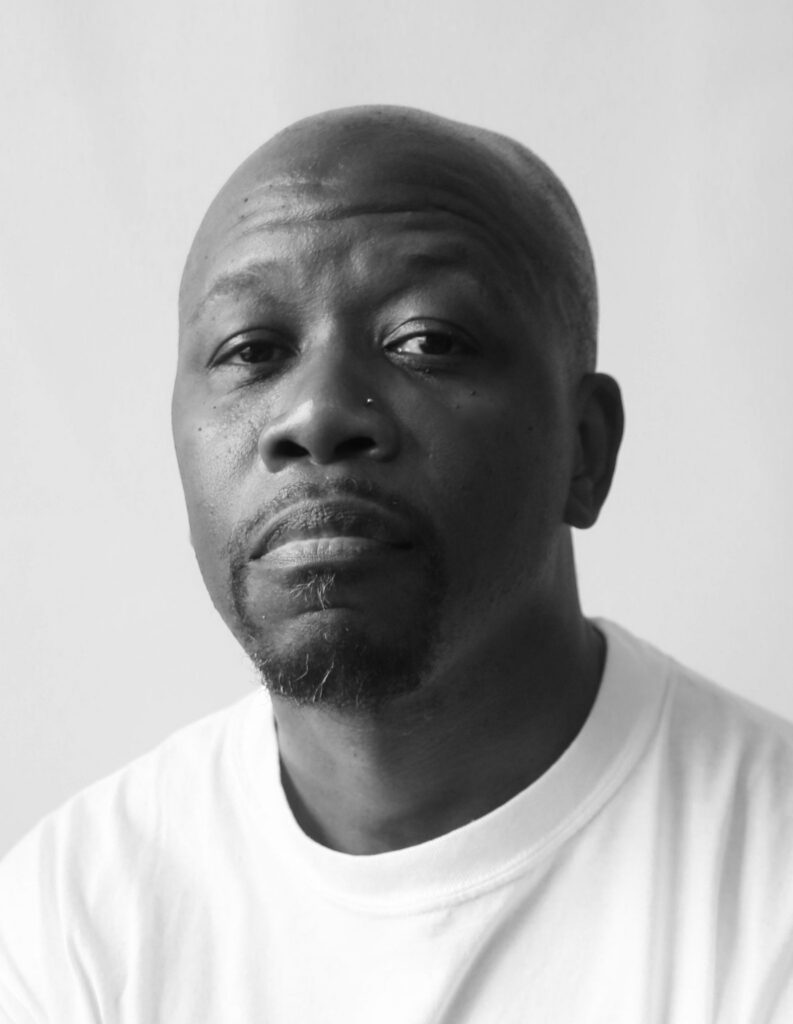
Bio: Tylonn J. Sawyer, a Detroit-born multidisciplinary artist, explores the intersections of identity, race, and history within popular culture. Trained in figurative traditions, his practice spans painting, drawing, and multimedia works that probe collective memory and contemporary narratives. Sawyer’s recognitions include the Kresge Arts in Detroit fellowship, the Alain Locke Award from the Detroit Institute of Arts, and the 2026 Kylemore Abbey Global Centre Residency Award. His work has been presented internationally, including at the Venice Biennale and the Museum of Contemporary Art Detroit.

Asia is a formerly incarcerated writer, poet and filmmaker who has worked with several organizations in the criminal justice reform space, including The Bail Project, Shakespeare in Prison, The Writers Block, and the Michigan Prison Doula Initiative. Asia is a 2019 Right of Return Fellow, 2021 Brennan Center for Justice Fellow, 2022 Art for Justice grantee, 2022 Highland Leader, and a 2024 Galaxy Gives Fellow. Her Chapbook, An Exorcism, was released in 2018 and her directorial debut, Beyond world premiered at Doc NYC in fall 2025. Asia is the Director of Storytelling and Media Productions at Zealous, an organization that produces films, digital media and campaigns focused on justice reform. She studied Criminal Justice and Film at the University of Michigan – Dearborn. Born and raised in Detroit and currently residing in Los Angeles, she walks the beach daily because she is no longer chained to land…or to any one thing.
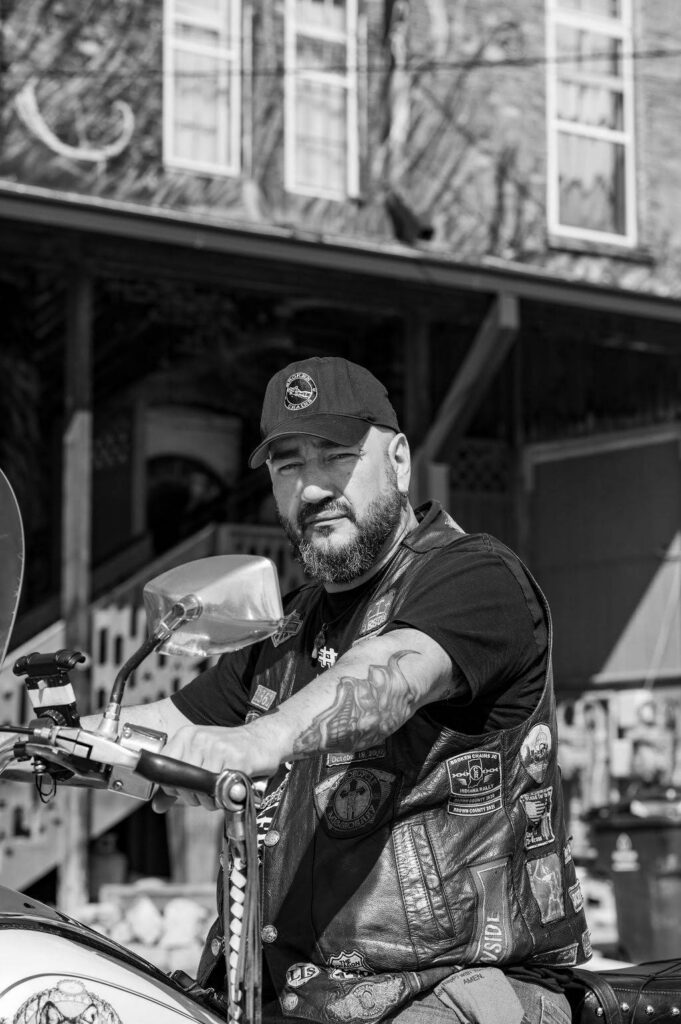
Bio: I am currently based out of Lansing, Michigan. I am a tattoo artist who also enjoys doing fine art and portraits. I mostly work in pencils but I can also work in acrylic paints. I have shown work at the Broad Museum on MSU campus, the PCAP art shows, the Gutman Gallery and various other art shows including the Ann Arbor Summer Art Fair. I am a member of the Ann Arbor Guild of Artists & Artisans. I have shown work through the emerging artist tent in Ann Arbor. I’ve done many speaking engagements on behalf of prison art through prisoner creative arts project and citizens for prisoner reform.
Johnny Van Patten is available for commissioned work including tattoos, portraits, fine art, and murals.
Why this project now?
As a legal nonprofit, we host an artist residency because we know that artists are at the forefront of narrative change, and can get us to think about complicated issues in new and imaginative ways. Cozine Welch’s work does exactly that. No More Heroes refuses to let justice be an abstraction. It insists that the conversation about abolition and reform must extend beyond policy into the lived experience of survivors—the trembling hands, the reflex to hoard, the ache of carrying an old world in a new body.
This residency is an investment in that imagination. It is also a recognition that the people most harmed by systems of incarceration are the people most equipped to lead us toward the world that we dream of living in.
We are honored to hold space for Cozine’s work.
About the Residency
Cozine Welch is the inaugural recipient of the Formerly Incarcerated Artist in Residence program. DJC has long held a commitment to centering the voices, creativity, and lived expertise of people most impacted by mass incarceration. The residency, which has existed since 2020 provides time, space, resources, and community to support the development of original work. DJC will open up applications for the residency that is open to all Michigan artists in June 2026.
For press inquiries, contact: media@detroitjustice.org